House mice — and, in more rural or wooded areas, deer mice — squeeze through gaps as small as a dime, breed rapidly, and gnaw wiring, insulation, and food packaging. It's both a fire and a contamination risk.
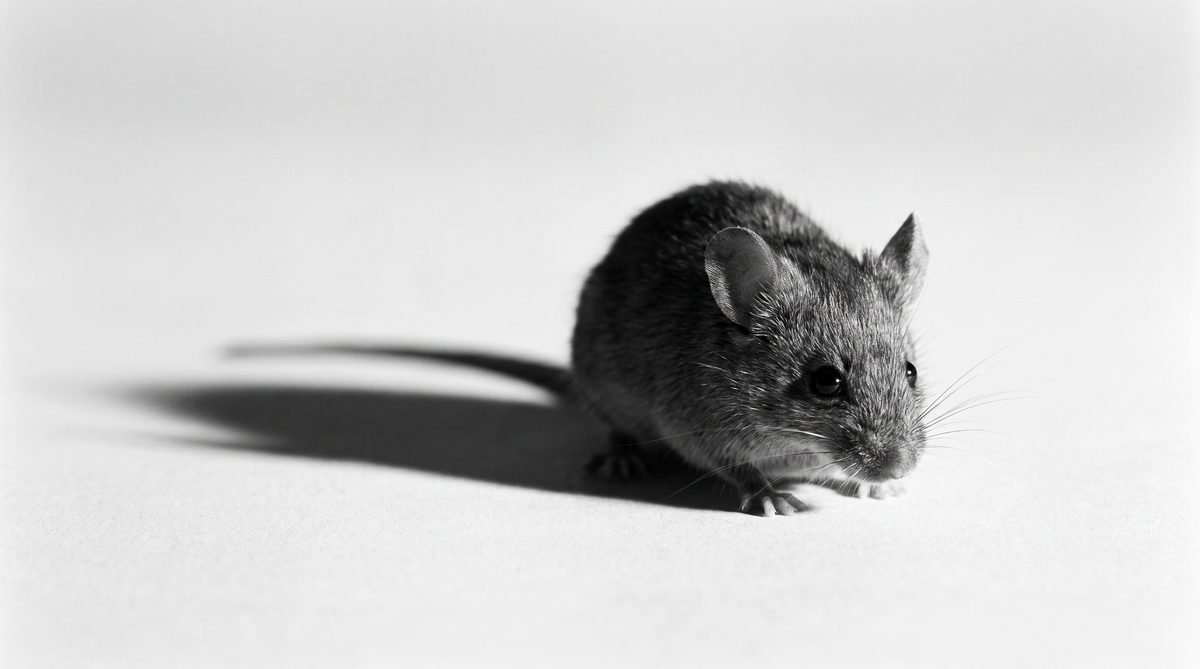
The common house mouse is small (2–4" body), gray-brown, with large ears and a long tail. The deer mouse is similar in size but bicolored — brown on top with a distinctly white belly and legs — and is more common in rural, wooded, garage, shed, and cabin settings. Deer mice are a known carrier of hantavirus, so their droppings should never be swept or vacuumed dry.
What attracts them: Accessible food, clutter for nesting, and small entry gaps around pipes, doors, and the foundation. Deer mice are drawn to outbuildings, wood piles, and seldom-used spaces.
Droppings, gnaw marks, or night sounds — and especially suspected deer mice, whose droppings require careful, professional cleanup due to hantavirus risk. Never sweep or vacuum them dry.