The brown marmorated stink bug is one of Maryland's most familiar fall invaders. As nights cool, they gather on sunny walls and squeeze inside through screens, siding, and window frames to overwinter — then reappear on warm winter days and again in spring. Crush one and you'll learn where the name comes from.
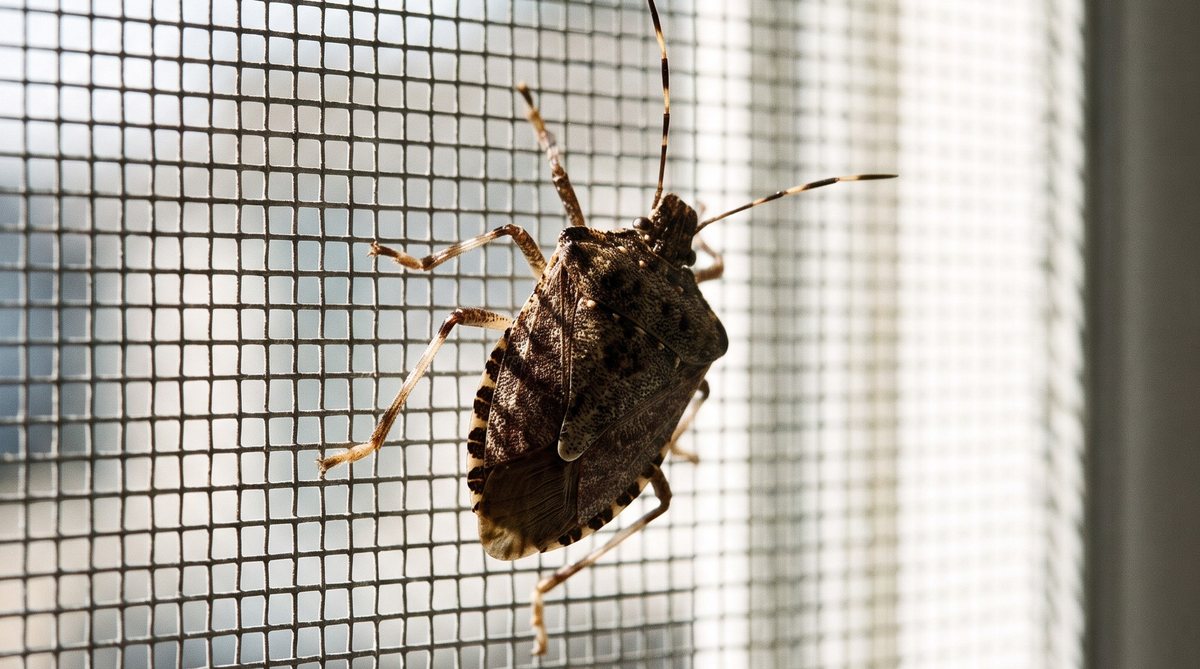
Shield-shaped, mottled brown bodies about 5/8" long with alternating light and dark bands along the edges of the abdomen and on the antennae. They fly clumsily, land with a distinct buzz, and release a strong, lingering odor when crushed or disturbed.
What attracts them: Warm, sun-facing exterior walls in late summer and fall; gaps around windows, doors, siding, soffits, and attic vents; and, once inside, warm attics and wall voids where they can shelter through winter.
When stink bugs are showing up inside in numbers each fall — a timed exterior treatment before they move in, plus sealing entry points, breaks the annual cycle. Indoor spraying alone won't fix it.